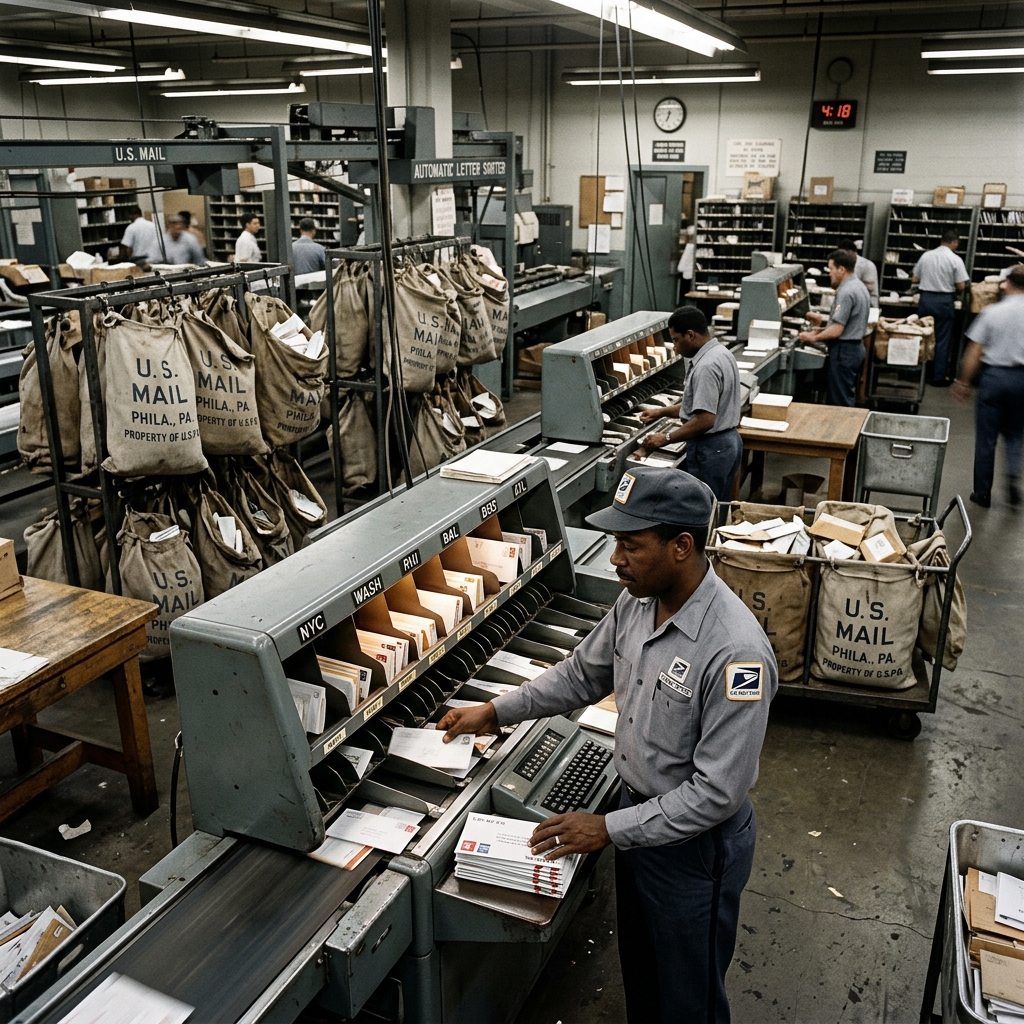
The Post-War Mail Boom
Following World War II, the United States experienced a massive economic boom. Along with this prosperity came an explosion in mail volume. Businesses were sending out catalogs, bills, and advertisements by the millions. The traditional method of sorting mail—relying on clerks who had memorized the routes of thousands of streets—was breaking down under the sheer volume.
Mr. ZIP and the Zone Improvement Plan
In July 1963, the United States Postal Service (USPS) rolled out the Zone Improvement Plan, giving birth to the acronym we all know today: ZIP code. To help the public adapt to this massive change, the USPS created a cartoon character named "Mr. ZIP." With his friendly face and swift movement, Mr. ZIP appeared on posters, stamps, and even TV commercials, urging Americans to "Use ZIP Codes" for faster service.
Decoding the 5 Digits
The beauty of the ZIP code lies in its geographical logic. The first digit designates a broad area of the country, starting from zero in the Northeast (like Massachusetts) and moving westward up to nine on the West Coast (like California). The next two digits narrow down to a central post office facility, and the final two digits identify the specific local post office or delivery area.
This simple 5-digit number completely revolutionized American logistics. It allowed for automated sorting machines, drastically reduced delivery times, and laid the foundational infrastructure that modern giants like Amazon and FedEx rely on today.